
What is sound therapy?
The British Academy of Sound Therapy describes sound therapy as “using sound, music and specialist instruments played in therapeutic ways, combined with deep self-reflection techniques to improve health and wellbeing.”
In practical terms, this means that in a session you will hear a mix of singing bowls, gongs and percussion, played in certain ways and in a certain order, to allow you to quieten your mind and create time and space to reflect on you and how you are.
There is no right or wrong way to experience a session. Even if you have participated in lots of sound baths in the past, each session may affect you differently.
For some people it can be an almost spiritual experience, but the sessions themselves are not linked to any particular faith or belief system, so they are open to everyone.
The use of sound in this way goes back thousands of years, from the use of gongs and bells in religious ceremonies through to the use of drumming to bring about an altered state of consciousness.
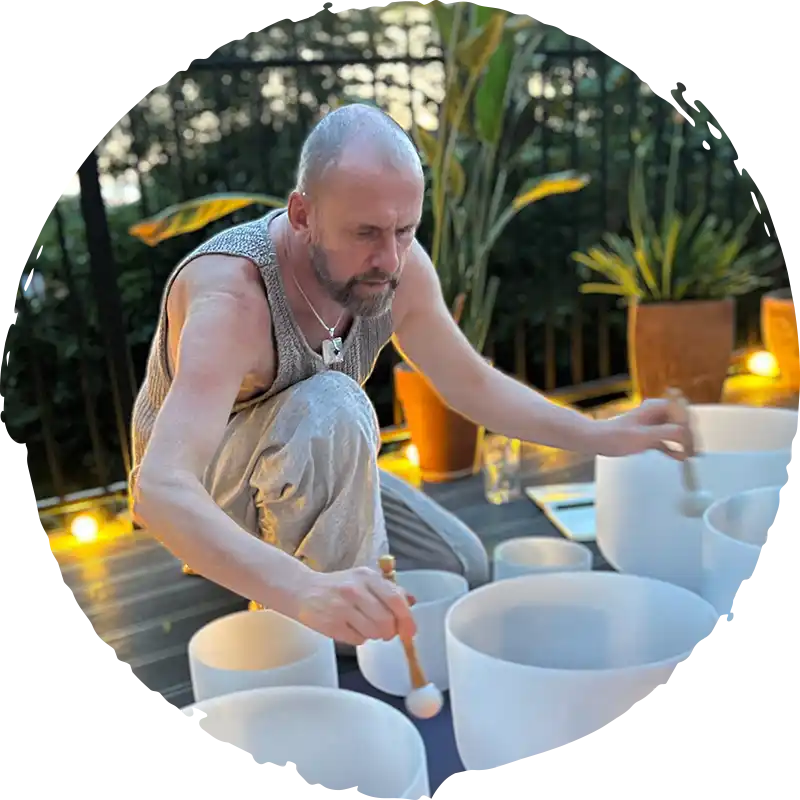
David’s training and approach
I am currently training with the British Academy of Sound Therapy for a Diploma in Group Sound Relaxation Therapy. In other words, I am training to be able to hold group sound bath and gong bath sessions.
For over 25 years the Academy has researched how certain instruments affect us in different ways. By playing these instruments in a certain order, the aim is to influence brainwave frequencies, enabling a person to enter an altered, or different, state of consciousness similar to very deep relaxation or meditation.
Whilst playing certain instruments in a certain order is a key part of the process, so is being able to observe, understand and adapt a session to those who are taking part. No two sound baths are ever the same, and my approach is to make sure that each session is as beneficial to those attending as possible.
Whilst most sessions will be general relaxation sessions, there will also be sessions specifically put together to deal with particular issues. Anyone is welcome to attend these sessions, but they will have been planned to have the most benefit for those living with a particular issue.
What happens in one of my sound baths
No two sessions are ever the same, but here is what you should expect if you attend one.
Arriving and settling in
You will be asked to arrive on time so you are able to complete a consent form, get yourself settled and comfortable on your mat or chair, and the session can start on time. Once a session has started you will not be able to join, as it is not fair to those already in the session who will be moving towards the deep state of relaxation the sessions hope to achieve.
A session will typically last for around 45 minutes to an hour, though longer sessions will be offered. This will be made clear at the time of booking.
During the session
If at any point during the session you wish to come out of the relaxation, you can simply open your eyes and/or sit up. I just ask that you are mindful of others in the room and do this quietly, as other people may be deeply relaxed.
Whilst ideally you will remain conscious during the session, sometimes people do find themselves falling asleep. If this happens, that is absolutely not a problem. Occasionally people may fall asleep and snore. If you are worried this might happen, you are invited to think about laying on your side rather than your back, as this often helps prevent this.
If you need to go to the toilet mid-way through a session, you absolutely can, again being mindful of others in the room. There is no physical contact during a session.
At the end of the session
At the end of the session you will hear the sound move to therapeutic percussion, which is designed to gently return you to the space you are in and return you to a waking state. This will be followed by a short period of silence to reflect and start to process anything that has come up for you.
After the session
Following a session, you will be given an opportunity to discuss your reflections. Whilst I am still training, you will also be asked to complete an evaluation form. The form is anonymous and, during my training, is part of the coursework I need to submit.
Details of aftercare will be given to you, as people often feel the effects of the session long after they have left the room. Having attended a session, you will always be able to reach out to me afterwards if you have any questions.
Why ‘The Sound Gardener’?
The name The Sound Gardener grew from a simple idea: sound, like a garden, needs tending.
I do not think of myself as a ‘healer’ or ‘fixer’, instead I see my role as someone who creates the right conditions for growth.
In a garden, you don’t force a plant to bloom. You prepare the soil, remove what is choking it, introduce nourishment and give it time. To me, sound therapy feels the same.
Every person who walks into a session carries with them their own landscape – some parts overgrown with stress, some compacted by old experiences, and some simply exhausted.
Rather than trying to control or dominate that space, I work gently. Himalayan bowls, gongs, crystal bowls, and therapeutic percussion are my tools. They create vibrations that can help loosen emotional soil, clear stagnant energy and encourage natural balance to return – allowing a sense of well-being to bloom.
Gardens also follow seasons. There are times of deep rest, times of quiet growth beneath the surface and moments of full bloom. Sound therapy honours these cycles. Not all sessions are dynamic. Some are very subtle. Some are about release. Some are about integration.
The name also reflects patience. A gardener understands that change doesn’t happen instantly. It unfolds. With care, consistency, and the right environment, resilience returns. Sound gardening isn’t about imposing sound onto someone. It’s about cultivating space – so harmony can grow on its own.
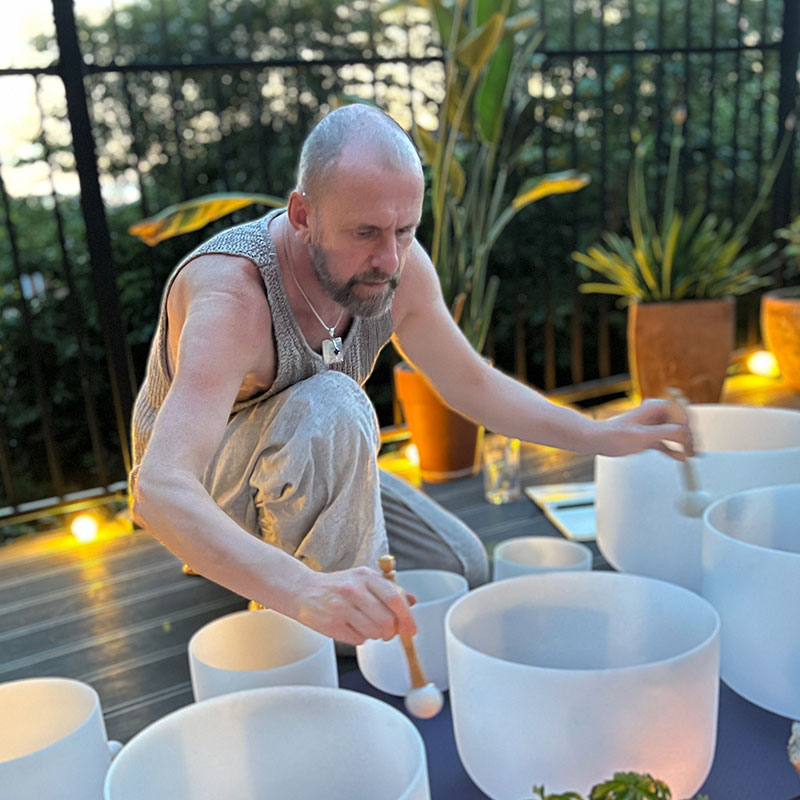
Some common questions and answers
I have tried to answer some of the questions people most often have before coming to a sound bath or gong bath. If you are new to this, not sure what to expect, or wondering whether a session is suitable for you, this is a good place to start.
If you still have questions after reading through these, please do get in touch and I will be happy to help.
Who the sessions are for?
The sessions are open to almost anyone over 18 to attend.
Under 18s are able to come, but they would need to be accompanied by a parent or guardian. I would also ask that you reach out to me before booking.
What is a sound bath?
A sound bath is a relaxation session where you listen to a mix of instruments such as singing bowls, gongs and therapeutic percussion. The instruments are played in particular ways to help quieten the mind, support relaxation and create space to pause, rest and reflect.
Sound bath or gong bath - is there a difference?
The terms sound bath and gong bath refer to which instruments are used during the session.
In a sound bath you will hear Himalayan singing bowls, crystal singing bowls, gongs and therapeutic percussion, or a combination of just some of them.
In a gong bath you will only hear gongs and therapeutic percussion.
Both are equally effective at promoting relaxation and a sense of wellbeing. They just sound different. Some people really enjoy the expansive sound of gongs, others less so. By offering a variety of sessions, I hope you will be able to find something that you enjoy and benefit from.
Are sessions safe for everyone?
Do I need to have been to a sound bath before?
No. Sessions are suitable for complete beginners as well as people who have been to sound baths before. There is no right or wrong way to experience a session, and every session can feel different.
What happens during a session?
You will arrive, complete a consent form, get yourself comfortable on a mat or chair, and then the session will begin. During the session you can lie down, sit, close your eyes, rest or simply listen. Towards the end, therapeutic percussion is used to gently bring you back to the room, followed by a short period of silence.
How long does a session last?
Most sessions last between 45 minutes and an hour, although longer sessions may sometimes be available. The exact length will be made clear when you book.
Do I have to lie on the floor?
No. Many people choose to lie on a mat with their eyes closed, but sitting in a chair is absolutely fine too. The important thing is that you are comfortable.
What if I fall asleep?
That is absolutely fine. Some people remain awake throughout, some drift in and out, and some fall asleep. There is no right or wrong way to experience the session.
Is sound therapy spiritual or religious?
Some people describe the experience as spiritual, but the sessions themselves are not linked to any particular faith or belief system. They are open to everyone, whether you have a faith or not.
Is David fully qualified?
David is currently training with the British Academy of Sound Therapy for a Diploma in Group Sound Relaxation Therapy. While completing his training, he is offering group sound bath and gong bath sessions, but not one-to-one sound therapy sessions.